The suspicious order and the good customer can look alike
An Evans retailer sells a specialty item online. One afternoon, checkout receives several attempts using different cards and the same delivery address. A gateway rule may flag the pattern. A legitimate customer ordering from a work network or while traveling can also look unusual. The useful goal is a review process, not the highest possible decline count.
What should a rule do?
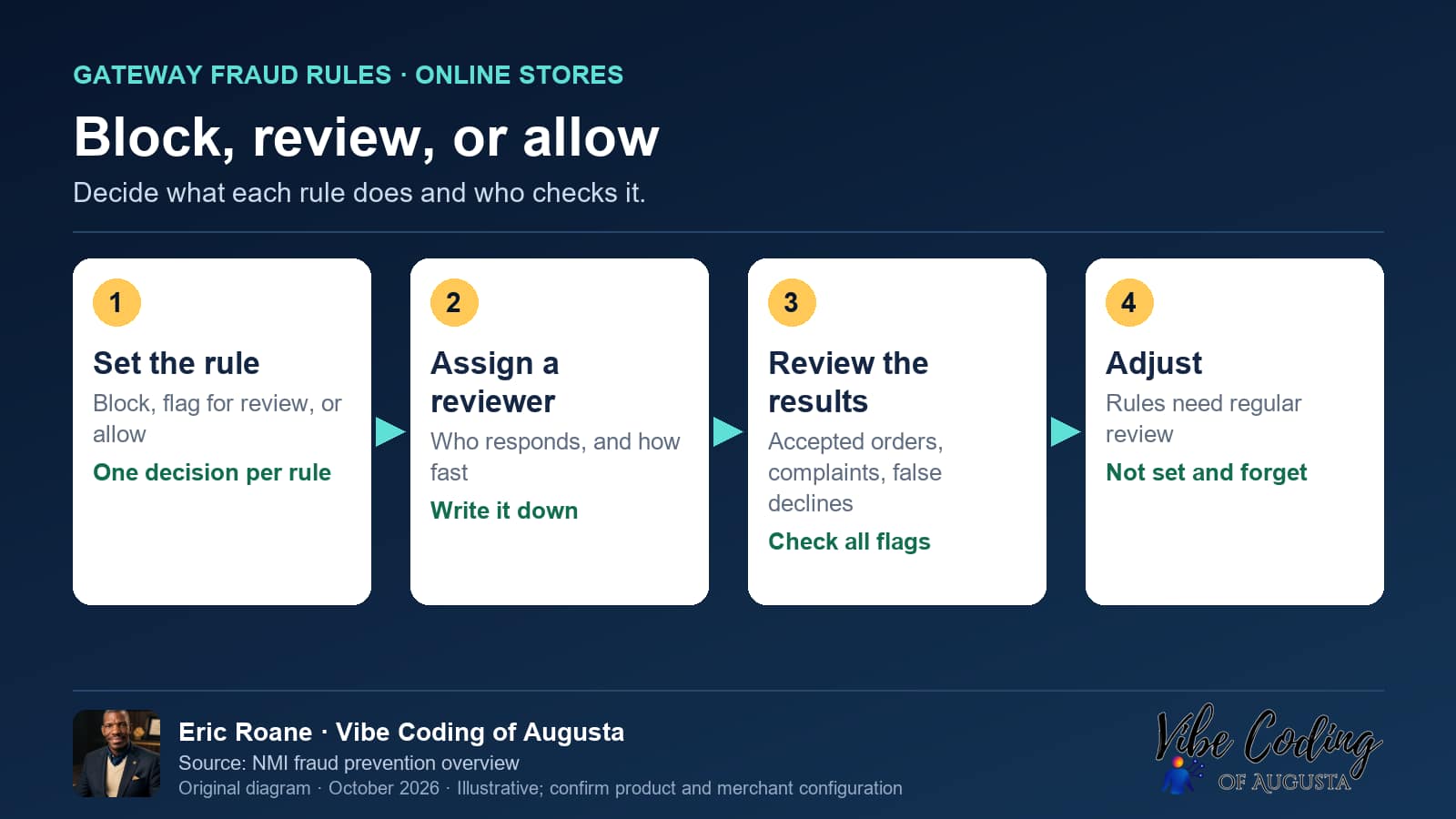
NMI describes configurable gateway fraud controls. For each rule, decide whether to block, flag for review, or allow an order. Define who reviews a flag, how quickly they respond, and what information they may use. Do not ship a high-value item merely because payment was authorized; authorization is not protection from every dispute.
Can you set rules once and leave them?
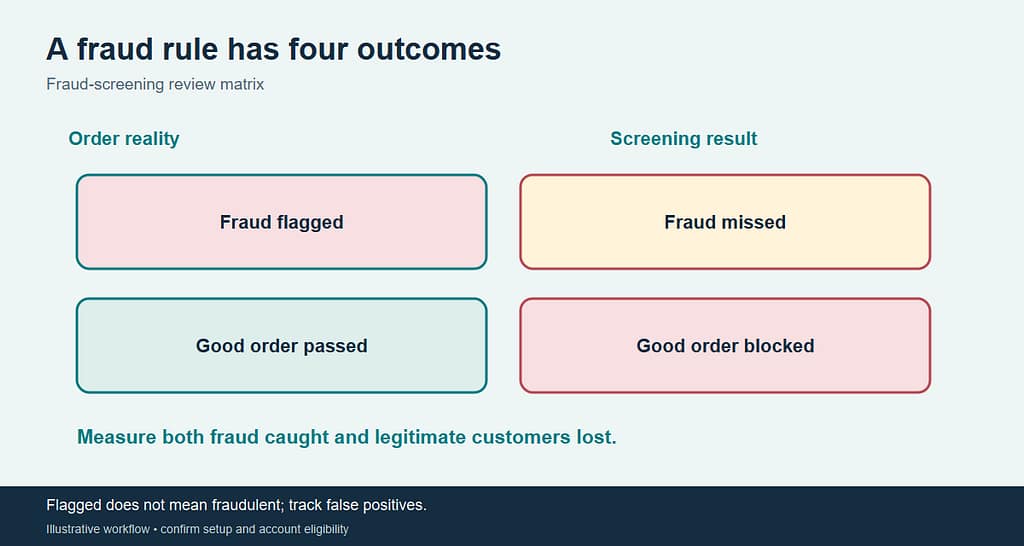
No. Review accepted orders, attempted fraud, customer complaints, chargebacks, and false declines. A rule that catches suspicious attempts but rejects repeat customers needs adjustment. If two hundred online orders are attempted in a month and ten are flagged, staff should inspect all ten and record how many were legitimate. A flag count is not a count of fraud stopped.
When is this worth examining?
It may matter when a merchant has meaningful online card activity or a repeated suspicious pattern. A counter-only store may need other controls first. The owner should document the transaction mix and business loss before deciding how much review time to spend.
Trust and security
Restrict who can change rules and view customer information. Never ask a buyer to email card images as proof of identity. Keep a written dispute procedure and train staff to distinguish authorized, settled, and dispute-safe states.
Vibe Coding of Augusta can help a CSRA online seller map the review queue and collect baseline data before changing payment controls.
Source: NMI’s fraud prevention overview.
Ready to look at a merchant account for your business? Start with a short form, and we will walk you through the next steps.