Many Augusta-area business owners have never been shown how a card payment is priced. The statement says “processing fees,” and that is where the explanation stops. This post walks through one way of pricing card processing, called interchange-plus, in plain words.
Three parts of every card fee
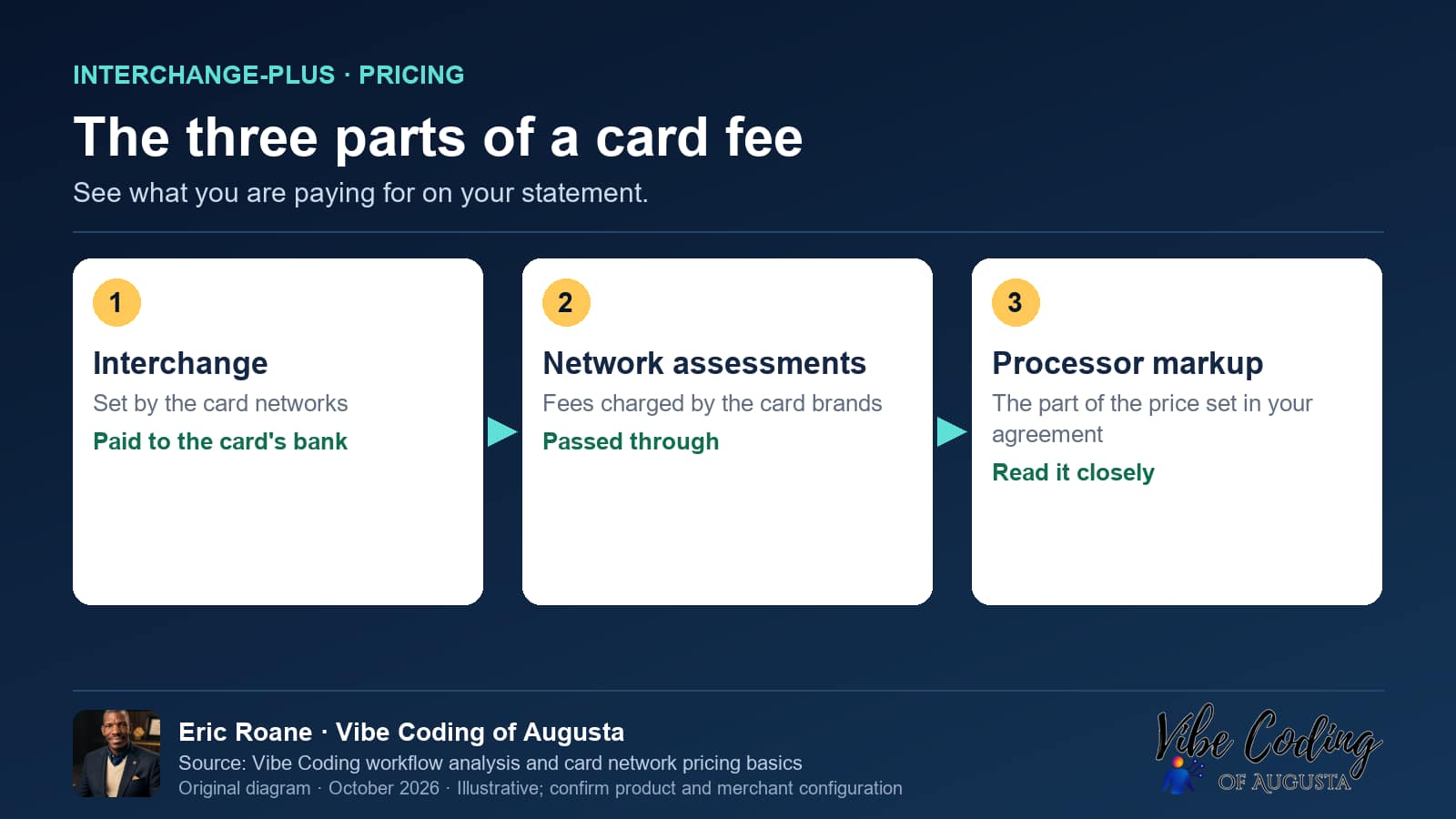
Every card sale has three costs inside it. Interchange is set by the card networks and paid to the bank that issued the customer’s card. It varies by card type and how the card is accepted. Network assessments are small fees charged by the card brands. The processor markup is the part the processing company adds. Of the three, the markup is the part that is set in your agreement.
The three parts of a card fee
Not to scale. Amounts vary by card and by provider.
What interchange-plus means
With interchange-plus, the statement shows the real interchange and network cost of each card type, then one stated markup on top. The word “plus” is the markup. You can see which part is the cost of the card and which part is the cost of the service.
How it differs from a flat rate
A flat rate charges one set percentage and fee no matter which card the customer uses. That is simple, and it can suit a very small or new business. The tradeoff is that you cannot see what each card actually cost. Debit cards from large banks are regulated and often cost much less than rewards credit cards, but a flat rate treats them the same. Which pricing costs less for your business depends on your monthly volume, your average sale, and your mix of debit and credit cards.
What to look for on your statement
- Is the markup stated as a percentage and a per-transaction fee?
- Are monthly, gateway, or compliance fees listed separately?
- Do you see the card types you actually accepted?
- Do the fees match what you were told when you signed?
If you cannot answer those from your statement, ask your provider to explain each line in writing before you decide anything. Our free Statement Read goes through it with you line by line.
This post is general information, not a promise of savings. Pricing and savings depend on your business and card mix.
Ready to look at a merchant account for your business? Start with a short form, and we will walk you through the next steps.