The cardholder’s bank may need one more signal
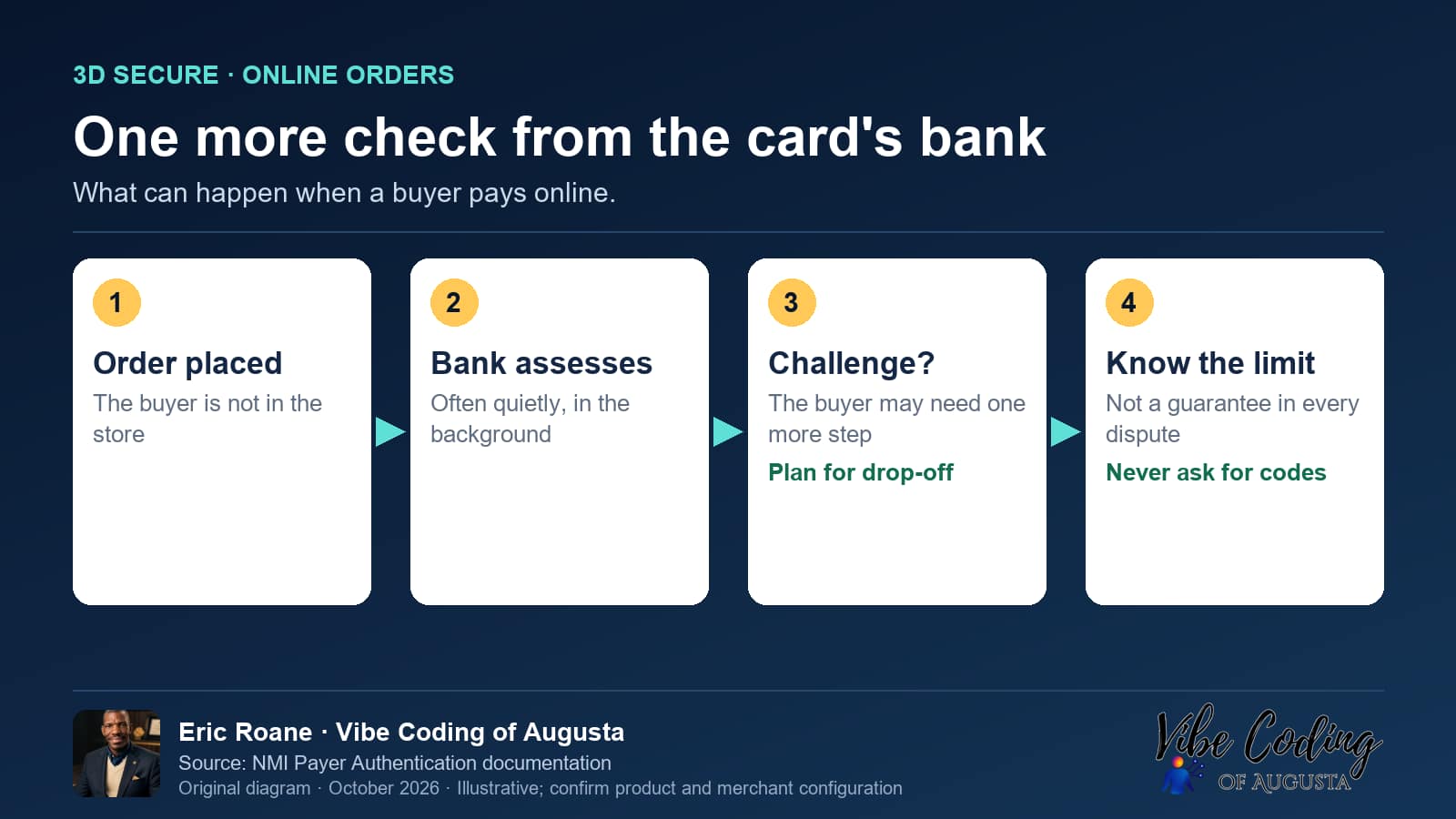
An Augusta seller receives an online order for an expensive item. Because the buyer is not physically present, the merchant may consider 3D Secure. NMI documents payer authentication as a flow that lets the card issuer assess an eligible transaction before it is submitted for processing. Some checks happen behind the scenes; the issuer may ask the buyer to complete an extra challenge.
What does the buyer see?
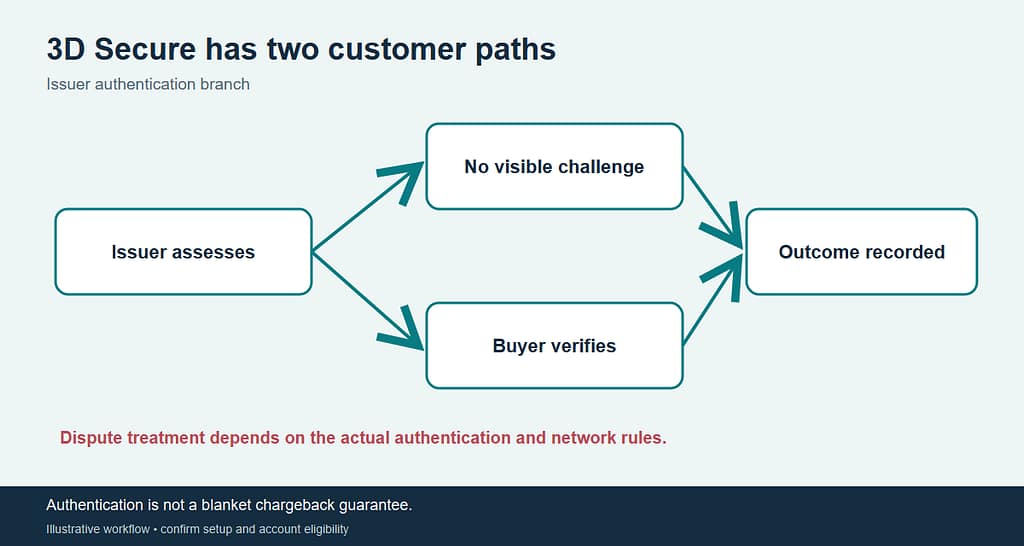
In a frictionless flow, the buyer may see no additional step. If the issuer requests a challenge, the buyer may need to verify through the issuer. The store needs a plan for abandonment, failed challenges, and customer questions. Staff should not collect one-time issuer codes or tell buyers to send them by message.
Does authentication guarantee a chargeback win?
No. Liability treatment depends on card-network rules and the authentication result, and it does not cover every dispute reason. A buyer can still dispute an item not received or service issue. Obtain the provider’s current explanation for the merchant’s card brands and processor before claiming a liability benefit.
What should the owner measure?
Record online order volume, unauthorized-use disputes, checkout abandonment, and manual review time before changing the flow. One disputed order among five hundred orders is a different decision from repeated unauthorized attempts. One month of data may be too small to attribute a change to authentication.
Trust and security
Keep the challenge in the supported integration and limit access to transaction data. Authentication, payment authorization, settlement, and dispute outcome are separate events. No challenge makes every later order safe.
Vibe Coding of Augusta can help a CSRA store map these customer and staff paths before requesting a 3D Secure implementation.
Source: NMI Payer Authentication documentation.
Ready to look at a merchant account for your business? Start with a short form, and we will walk you through the next steps.